

xitnyk.over-blog.com/
18 Janvier 2021

One of the most common questions Mac users ask is, 'How do I reset my Mac's password?' If you're using Mac OS X 10.7 Lion or 10.8 Mountain Lion, there are a couple ways you can go about it – and they're both pretty easy to do.
Or, if you have a different account on the Mac that you know the password to, you can recover your Mac admin password by following these steps: Click on the Apple logo in the top left of the tools bar and click Log Out. Select the alternative account and enter the password. Open System Preferences Users & Groups. Forgot your Mac password? Here are 5 ways to reset your Mac password using Apple ID, recovery key, reset assistant, using other admin account and from Terminal based on the FileVault option enabled or not.
MacYourself previously published a popular article explaining how to reset the password on Macs running 10.4, 10.5 and 10.6. Unfortunately, those methods no longer work in 10.7 Lion or 10.8 Mountain Lion. That doesn't mean you're out of luck – there are new ways to reset a password in Lion.
Since Mac OS X 10.4, Apple allows system administrators to change one admin password from another admin account. IT pros welcome this because it allows them to easily help less experienced users without having to resort to using more time-consuming Mac password reset methods.
As mentioned in our original article, it's important to remember that anyone with physical access to your computer (whether it is a Mac, Windows or Linux) can eventually find a way in. There's no such thing as complete security if someone who knows what they're doing is sitting in front of your computer. If you're truly concerned about the security of your files, you should look into using FileVault to encrypt them.
If you bought a brand new Mac with Lion pre-installed, the hard drive includes with a recovery partition that gives you access to a bunch of different tools. Here's how to take advantage of this utility to reset your Mac's password:
Anyone running Mac OS X Lion can take advantage of this method:
The passwords for all accounts on macOS Mojave 10.14, macOS Sierra, OSX 10.11 El Capitan, OSX 10.10 Yosemite, OSX 10.9 Mavericks and OSX 10.8 Mountain Lion including admin and standard user accounts can be reset and changed when booted from the Recovery Partition on macOS.
Reboot into the Recovery Drive by choosing the ‘Apple‘ menu > Restart, hold down the ‘command' + ‘r' keys on the keyboard during the start up process, when you see the start up screen you can let go. Facebook customer service chat online. When the machine boots eventually you will see the macOS or OS X Utilities screen.
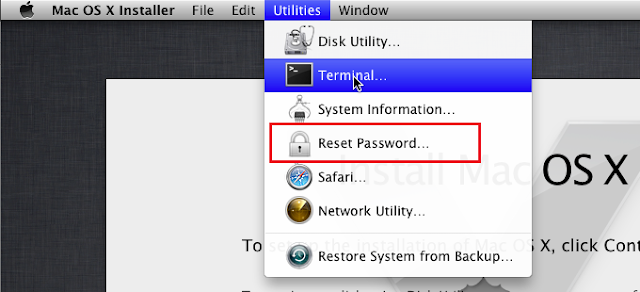
Go to the Utilites menu and select Terminal
Car design digital drawing software, free download. At the prompt type ‘resetpassword' (hit enter)
This launches the Reset Password screen, select the Volume Hard Drive in the top part of the window pane, then for the user that you need to reset select the user account in the lower part then add and confirm the new password and click save, you get a confirmation screen and details about the keychain account. Slots lv free spins.
Go to the Apple Menu and click Restart to boot back to the normal hard drive and the new password will take effect immediately.
If you are using macOS Mojave the screen you see is a little friendlier, just select the account you want to reset the password on and follow the instructions.
No matter which method you use to reset administrator password on mac, it won't automatically update the password protecting the account's login keychain. Since the keychain is still protected with the old administrator password, there would be no way to get back into it unless you could update keychain password or create new keychain.
Probably you are just prompted to do that at startup after Mac admin password reset, such as on Yosemite, or constantly asked to enter the keychain password after Mac login. Regardless of which happens, resetting keychain password would help you access Keychain again.
After you log into Mac with new administrator password, follow the steps below.
1. Open Keychain Access from Finder> Applications Utilities, and choose Keychain AccessPreferences from top menu.
2. In newer versions of Mac OS X, such as on Yosemite, you will see a button Reset My Default Keychain under the General pane.
3. Click it and enter the new login password in Password field to create new keychain.
Note: If you have no such button, choose EditKeychain List (Command + Option + L), select the login keychain, and click the minus button to delete it.
4. Quit Keychain Access and restart Mac. A new login keychain will recollecting and storing the passwords for Wi-Fi networks, email accounts, Web sites, and other logins as they occur.
If you cannot work with Keychain Access because of something like Messages Agent constantly asking for the forgotten login keychain password, you can use command line to reset Keychain password in single user mode.
1. Restart Mac and hold on Command + S to enter single user mode.
2. After you are prompted to enter a command-line after numerous lines of status messages, type this command to mount the root Mac OS X drive as writable.
mount -uw /
3. Delete that account's login keychain.
rm /Users/shortname/Library/Keychains/login.keychain
Note: If you are not sure the shortname, please confirm it with command 'ls /Users' at first.
4. Reboot Mac by command 'reboot'.
After Mac starts, you should have created a new keychain on Mac.
1. Click Update Keychain Password and enter the old password at startup, or continue login and enter old password when you are asked.
2. Open Keychain Access and right click on login, and choose the option Change Password for Keychain 'Login' from pop-up menu.
3. Enter the old password in 'Current Password' field and new password in 'New Password' box. Verify it and click OK to successfully change keychain password.
Related Articles:


/image%2F6288000%2F20210218%2Fob_1646ac_macbook-boot-from-usb.jpeg)
/image%2F6288000%2F20210218%2Fob_7d37e2_how-to-access-camera-on-macbook-pro.jpeg)
/image%2F6288000%2F20210218%2Fob_362c91_macbook-air-with-white-keyboard.jpeg)
/image%2F6288000%2F20210218%2Fob_c1292a_3d-animation-software-free-download-fo.jpeg)